Klezmer: A Musical Expression of Jewish Identity
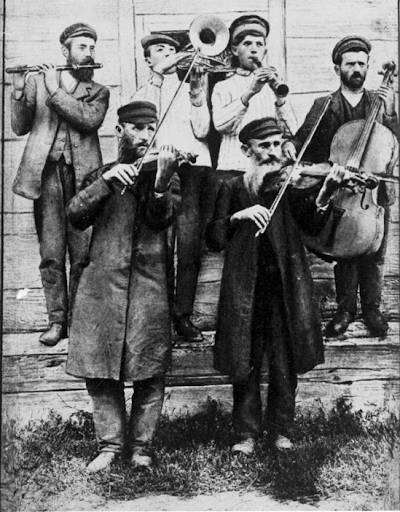
This lesson invites learners into the vibrant, evolving world of klezmer—an Ashkenazic Jewish instrumental tradition rooted in celebration, prayer, and everyday life. Moving from village celebrations and communal gatherings to American stages and contemporary reinvention, learners will explore how klezmer carries Jewish memory, emotion, and identity across time and place.
Designed for adults in a classroom, synagogue, or workshop setting (60–90 minutes), this lesson assumes no specialized musical background.
Through this lesson, learners will understand that:
- Klezmer is a living tradition—rooted in history, yet continually reinterpreted by new generations.
- Klezmer grew in specific Jewish communal settings, shaped by both local cultures and Jewish sacred sound worlds.
- Klezmorim played essential roles in Jewish life, and those roles shifted as Jewish communities migrated and modernized.
- The 20th-century klezmer revival preserved what was at risk of being lost—and expanded the tradition through creativity, fusion, and renewal.
- Contemporary klezmer often stretches beyond historical boundaries, blending styles while balancing preservation with innovation.
Learners will listen to classic and contemporary examples—from early bandleaders and foundational recordings to revival and post-revival artists who balance preservation with innovation. Along the way, participants learn to hear hallmark features of klezmer style: gesture, ornamentation, rhythmic drive, and the way instruments can “speak” like a voice. Learners will also explore distinct dance rhythms (freylekhs, bulgar, khosidl, zhok) and the improvisatory doina, considering how these sounds communicate joy, longing, humor, and spiritual yearning.
Key figures may include: Dave Tarras, Naftule Brandwein, Molly Picon, Abe Ellstein, the Klezmatics, and contemporary artists such as Michael Winograd, Zoë Aqua, Socalled, and Lea Kalisch.
Materials: slideshow, audio/video playback, and basic projection/speakers (handouts optional).
Evidence of learning: learners share a short reflection or discussion takeaway connecting sound, history, and identity.
Essential Questions:
- How did klezmer develop as a distinctive form of Jewish musical expression?
- What stylistic elements define klezmer even as it evolves over time?
- How did the klezmer revival reflect shifts in cultural identity and musical innovation?
- What roles did klezmorim play within Jewish communities historically, and how did these roles change over time?
- What do you hear in klezmer that feels like prayer—even without words?
- How does a community’s music help people feel they belong—across generations and geography?
- What happens to Jewish identity when a tradition is reclaimed after it wasn’t fully passed down?
- How do today’s artists hold the tension between honoring the old and making something new?
This Stories of Music lesson is made possible in part thanks to the generous support of the Azrieli Foundation.
Materials & Resources
We are deeply grateful to the two people who wrote these lessons:
Dr Lorry Black
Cantor Kenneth Cohen
Our gratitude extends to the pedagogic advisors and reviewers of this lesson:
Dr. Mark Kligman, PhD, Mickey Katz Endowed Chair in Jewish Music, UCLA
Christina Crowder
Dr. Tina Huynh