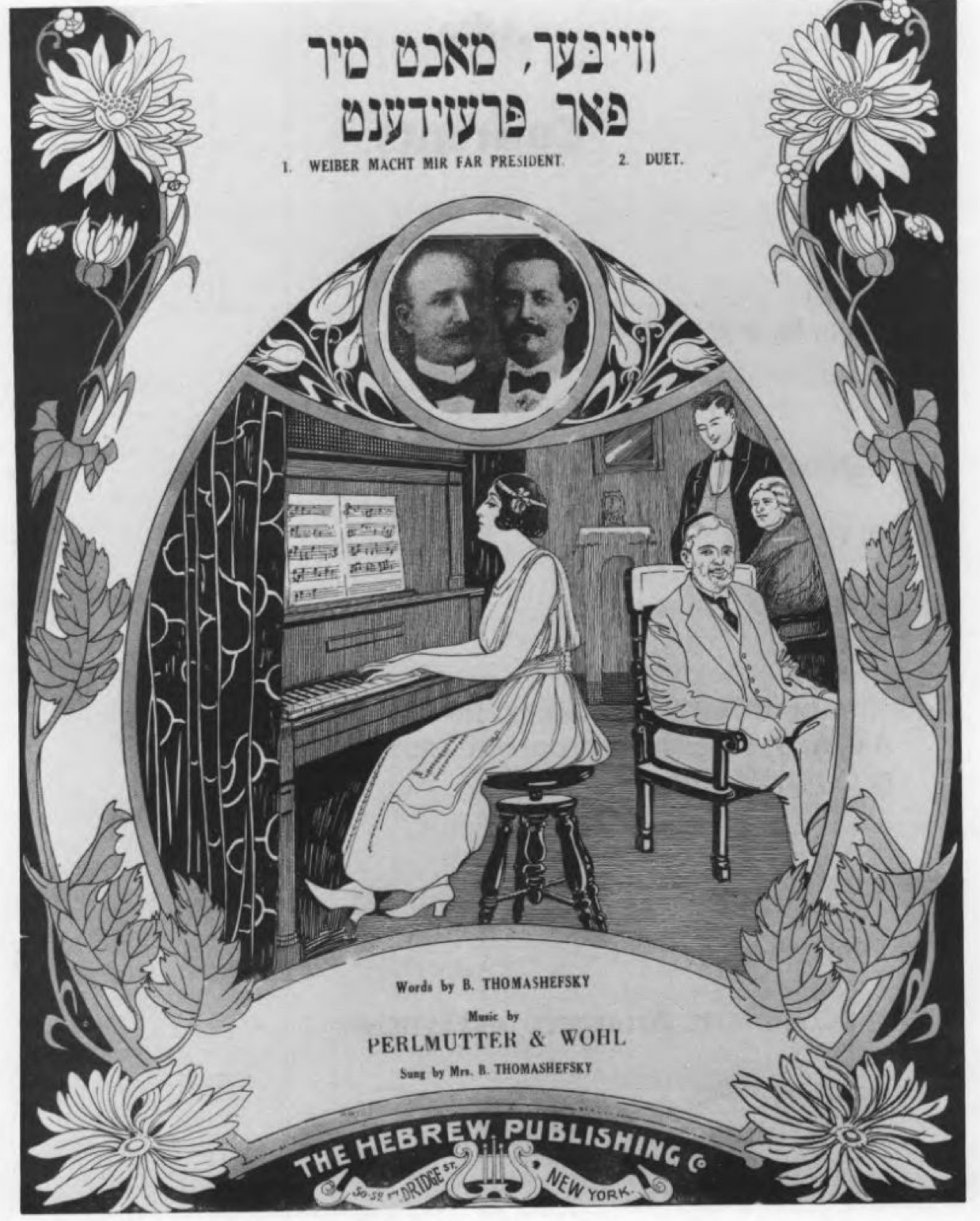
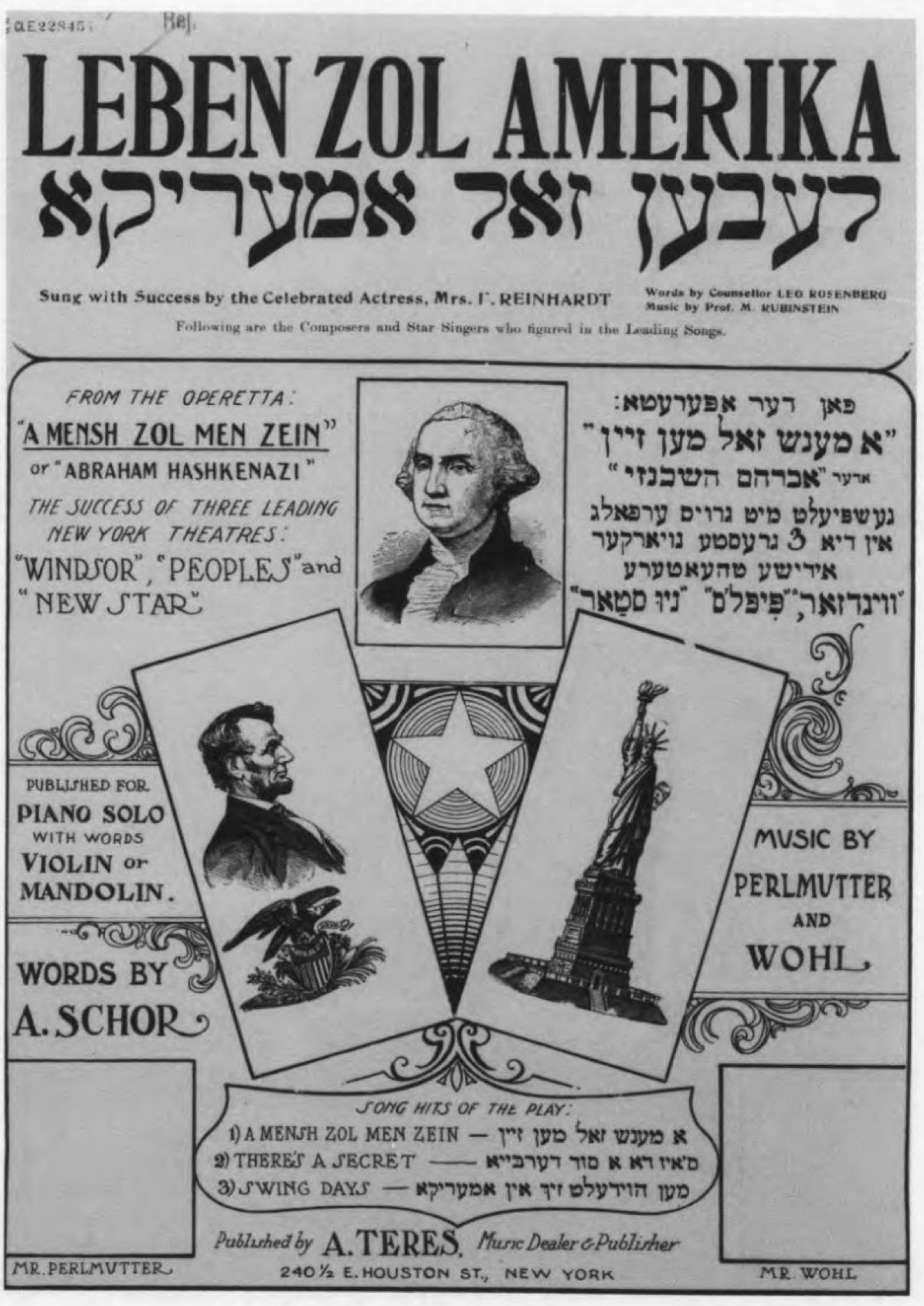
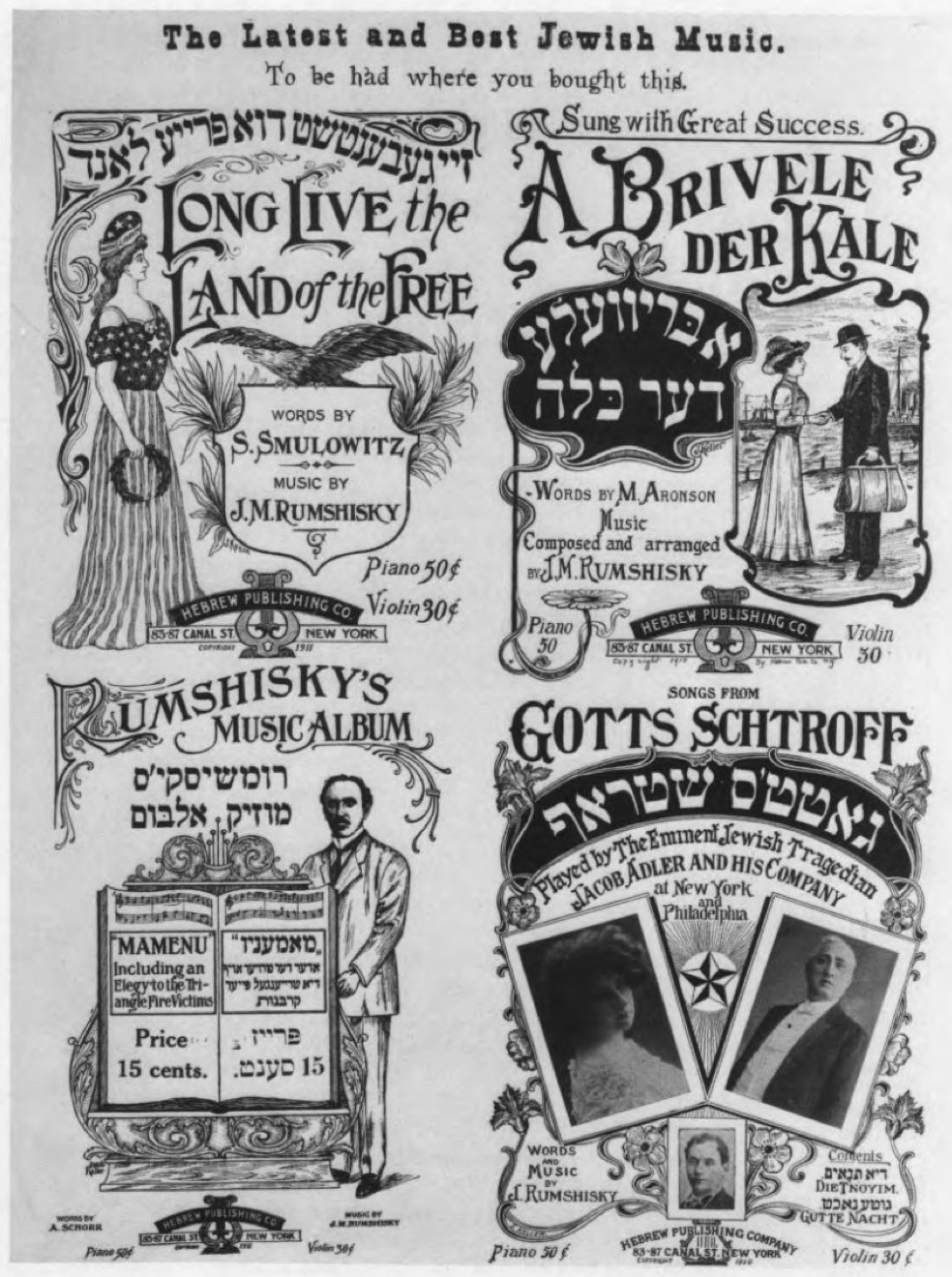
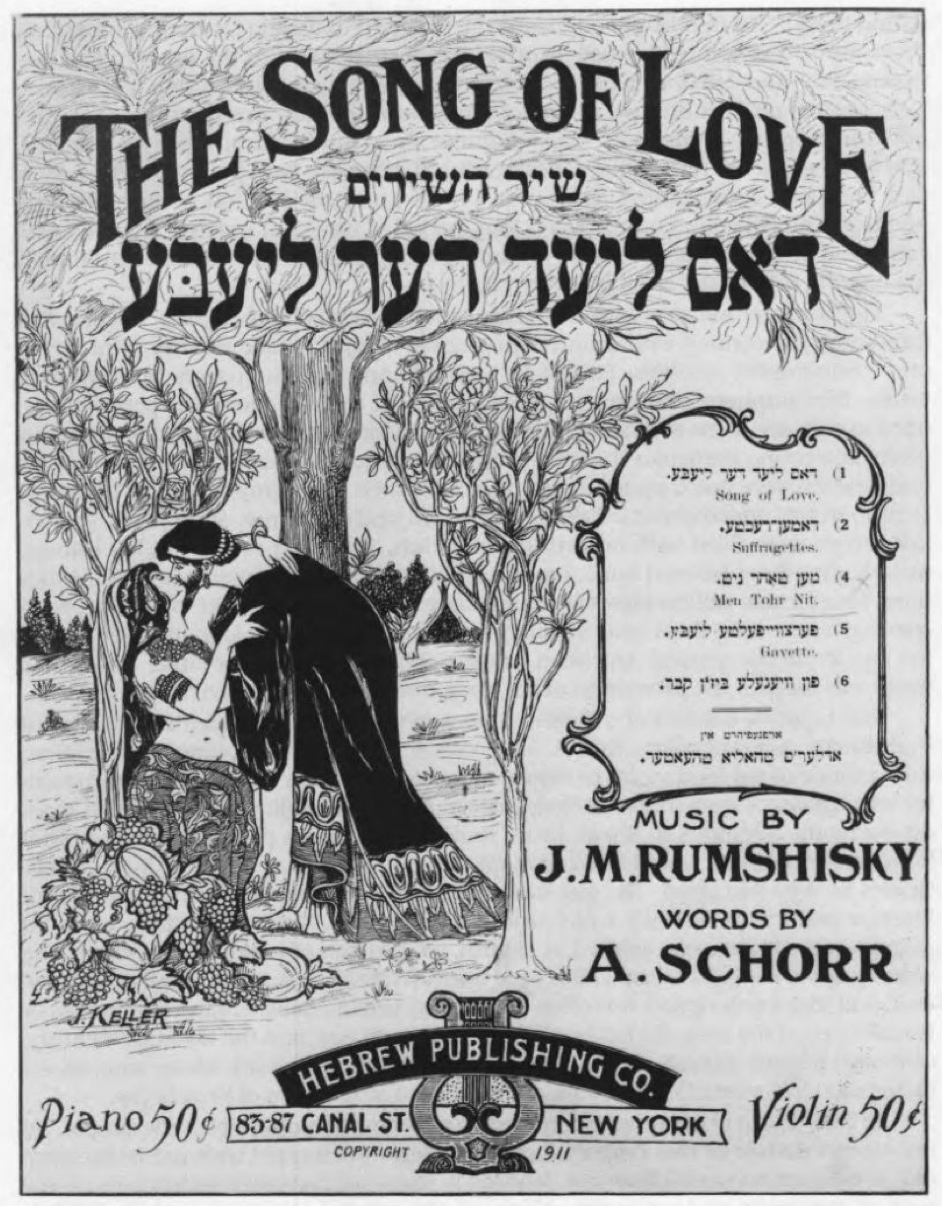
The Library of Congress, Irene Heskes, "Yiddish American popular songs, 1895 to 1950 : a catalog based on the Lawrence Marwick roster of copyright entries”
The Source Text:
Irene Heskes’ Yiddish American Popular Songs, 1895 to 1950: A Catalog Based on the Lawrence Marwick Roster of Copyright Entries, published by the Library of Congress, is a comprehensive bibliographic catalog documenting thousands of Yiddish popular songs registered for copyright in the United States between 1895 and 1950. Building on librarian Lawrence Marwick’s original index-card roster of copyright entries, Heskes revised, expanded, and organized the material, adding detailed information about composers, lyricists, arrangers, publishers, and performance contexts. The catalog reflects the central role of Yiddish theater, popular entertainment, and immigrant cultural life in shaping American Yiddish music, and it serves as an important research tool by preserving and documenting songs—many of which existed only as copyright deposits or unpublished manuscripts—thereby providing a historical record of the development, themes, and influence of Yiddish popular music in the United States during the late nineteenth and early twentieth centuries.
The Project:
This project transforms Irene Heskes’ Yiddish American Popular Songs, 1895–1950 into structured, machine-readable metadata to support a graph database of Jewish music built on linked open data principles. The catalog’s detailed entries—covering song titles, composers, lyricists, publishers, performers, dates, and theatrical contexts—are systematically extracted, normalized, and mapped to standard ontologies (such as RDF and existing cultural heritage vocabularies) to create interconnected entities representing works, people, places, and performances. By assigning persistent identifiers and linking to external authority files (e.g., VIAF, Library of Congress Name Authority File), the project situates Yiddish popular song within a broader, interoperable network of Jewish musical culture across time and geography. The resulting graph enables complex queries and analysis—such as tracing collaborations, migration of musical styles, or the evolution of themes—while also making this historically significant repertoire more discoverable, reusable, and integrable with other digital humanities and musicology datasets.
The Process:
All 3,428 song entries in the Heskes catalogue were converted from scanned PDF images into a digital spreadsheet format. The process is summarized as follows:
- First, we created a new Google Sheet with the following categories as column headers: year, title, catalogue type and number, catalogue date, composer(s), lyricist(s), arranger(s), publisher(s), and description.
- Next, the specific details of each song were copied and pasted manually into each row. Cells were left blank if a song had no information for that category.
- Third, we created a second spreadsheet listing the geographic locations of the 20 most common publishers listed in the catalogue along with the total number of songs each company published.
- Finally, once both spreadsheets were completed, all metadata was visualized in Tableau.